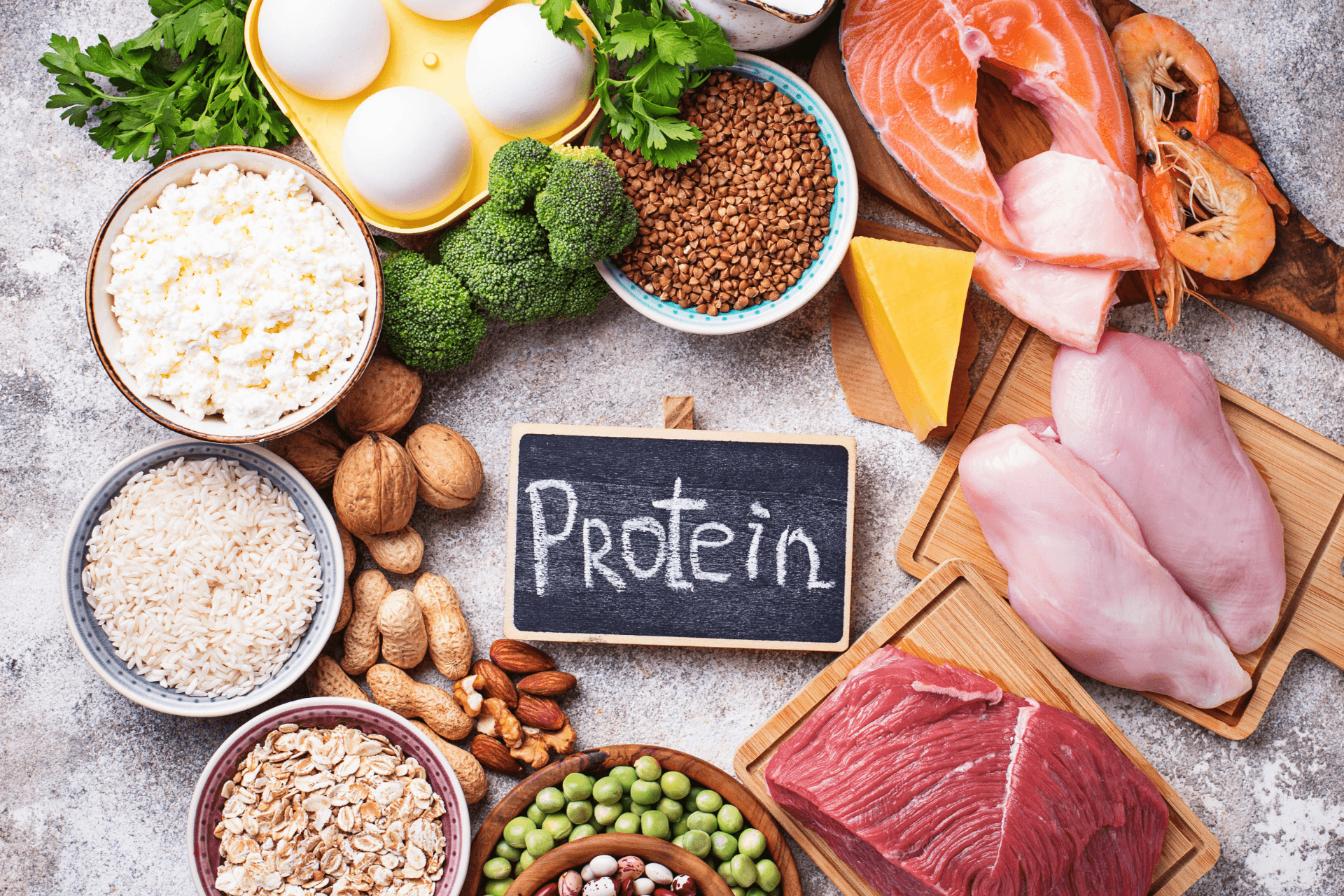
Why are proteins essential to our bodies?

Pourquoi les protéines sont essentielles à notre organisme ?

Visit proteins are essential to life. They are involved in tissue construction, enzyme and hormone production, immune system function and the maintenance of numerous vital functions.
Without a sufficient and balanced supply of protein, the body simply cannot function optimally. To better understand their role, it is useful to look at their basic components: the amino acids.

Proteins and amino acids: understanding how they work

Proteins are made up of’amino acids, which can be compared to letters used to form words.
To write the word ZEN, Z, E and N are required. If one of these letters is missing, the word cannot exist - even if the others are present in large quantities.

The same applies to proteins: the body needs all necessary amino acids, in sufficient proportions to manufacture the proteins it needs.

Among them, 9 amino acids are considered essential, The human body is unable to synthesize them on its own. They must therefore be supplied by the diet.

Animal proteins: a complete profile

Animal products - meat, fish, eggs, dairy products - naturally contain all the essential amino acids in proportions adapted to human needs.
They are therefore sources of so-called complete, that can be easily used by the body.

Plant proteins: complementarity and diversity

Visit plant protein do not always contain all the essential amino acids in optimal quantities. However, a well-constructed plant-based diet can cover requirements thanks to the principle of complementarity.

  • Visit cereals (rice, wheat, millet, spelt, buckwheat...) are low in lysine but high in methionine.
  • Visit pulses (lentils, chickpeas, beans...) are rich in lysine but lower in methionine.

Combine them in the same meal or over the course of the day, and you've got a complete protein profile.
Similarly, combining legumes with oilseeds (seeds, walnuts, almonds) improves the overall intake of essential amino acids.

Naturally complete plant proteins

Some plant sources stand out for their natural richness in essential amino acids, including :

  • the quinoa,
  • the buckwheat,
  • the soy,
  • the hemp,
  • visit algae and micro-algae.

They are excellent alternatives for people reducing or excluding animal products.

Insufficient protein intake: what are the consequences?

Every day, the diet must provide enough complete proteins - animal or vegetable - to meet the body's needs.
In the event of inadequate intake, the body sets up a mechanism of compensation : it draws essential amino acids from so-called «secondary» tissues such as skin, hair and nails, to preserve vital functions.
This phenomenon may go unnoticed for several years, but over the long term it can lead to a overall weakening of the body, for lack of sufficient resources.

Vegetarian and vegan diets: the need for vigilance

Vegetarian and vegan diets exclude all or some animal products. If poorly balanced, they can result in an inadequate intake of complete proteins.
It is therefore essential to :

  • master the plant associations,
  • integrate naturally complete sources,

To ensure optimal protein intake, it may be useful to seek the support of a nutrition professional or dietician.

Eggs: the protein of tomorrow?

Eggs are a source of high-quality protein particularly interesting, as it can be harvested without harming the animal. It is also the only food of animal origin that contains everything needed to give life. This means that the egg contains all the elements necessary for the development of life. What's more, being made up of a single cell, it generates little metabolic waste, especially purines.

Gone are the days of battery farming and the mistreatment of hens who have never seen the light of day or scratched the ground in their lives. Instead, let's talk about the chickens in our gardens, our neighbors... Free-range chickens, They peck at the ground and receive our kitchen peelings. The hen lays an egg every day, but does not incubate it, except during the breeding season. If no one takes the egg, it's left in the wild. Wouldn't that be a gift?

In terms of preparation, it's best to use an egg with a flowing yellow (hard-boiled, soft-boiled or fried) in order to preserve its precious nutrients, particularly its vitamins and healthy fats.

Focus: spirulina, a plant protein of interest

There are many protein-rich plant-based alternatives, such as soy, hemp and rice powders. They can provide support for inadequate intakes, or complement dishes low in vegetable or animal proteins, but are not sufficient to replace the recommended protein intake.

Spirulina: a plant source rich in protein

The spirulina is a superfood very popular for its numerous benefits for the body especially for vegans and vegetarians. Spirulina is a micro-algae with a distinctive rich in vegetable proteins about 60% of its dry weight (source CIQUAL). It supplies all essential amino acids which our bodies need to function properly. Its consumption, although limited in quantity, makes it an excellent complement to boost protein intake, particularly in diets that are low in protein.

High iron and calcium content

Spirulina also provides :

  • from iron (28.5 mg / 100 g),
  • from calcium (120 mg / 100 g),

two minerals often less present in plant-based diets.

Spirulina and vitamin B12: the need for caution

Spirulina contains some forms of vitamin B12, but their bioavailability remains uncertain. It contains mostly inactive analogues that cannot be used by the human organism. Current scientific data therefore do not allow us to consider it a reliable source of active vitamin B12.
People following a vegetarian or vegan diet should give priority to :

  • fortified foods,
  • or appropriate supplementation, on the advice of a healthcare professional.

A sustainable source of protein

Spirulina is grown above ground, requires few resources and has a limited environmental impact. It thus represents a sustainable alternative to animal proteins, while helping to capture carbon and produce oxygen.

Protein is an essential nutrient for healthy functioning.

Visit 9 essential amino acids must be consumed every day to ensure optimal functioning of the body. It is therefore necessary to pay close attention to the composition of our plates every day to avoid deficiencies over the long term. Eggs are an excellent alternative for vegetarians. And to supplement its intake, protein superfoods are excellent allies.

Protein is life...!

Permitted and tolerated health claims:

Proteins contribute to :

  • increase muscle mass,
  • maintenance of muscle mass and normal bone structure.

From 0 to 18 years of age, protein is essential for normal growth and bone development in children.

Because of its protein content, spirulina is recommended for slimming diets to help maintain muscle mass.

Iron contributes to the normal formation of red blood cells and hemoglobin.

Calcium is needed to maintain normal bones and teeth.

Vitamin B12 contributes to the normal functioning of the nervous system and plays a role in the cell division process.